
Is Lisbon Walkable? The Pros and Cons of Exploring on Foot
Walking around a new city is one of the best…


Walking around a new city is one of the best ways to connect with its culture. As more travelers flock to Portugal, one question arises frequently: Is Lisbon a walkable city? Having spent a week exploring its streets, I’m excited to share my thoughts on this topic.
Walking Around Lisbon

As you stroll through Lisbon, you’ll find throngs of locals and visitors alike enjoying the fresh air. The city is visually stunning, boasting colorful facades, beautiful black-and-white tiled sidewalks, historic churches, and breathtaking lookouts. Morning or early evening walks in one or two neighborhoods can be a delight.
However, covering longer distances on foot can be less enjoyable due to steep hills, slippery sidewalks, and limited shelter from the elements. These challenges can certainly impact how many visitors experience the city.
Sidewalks in Lisbon
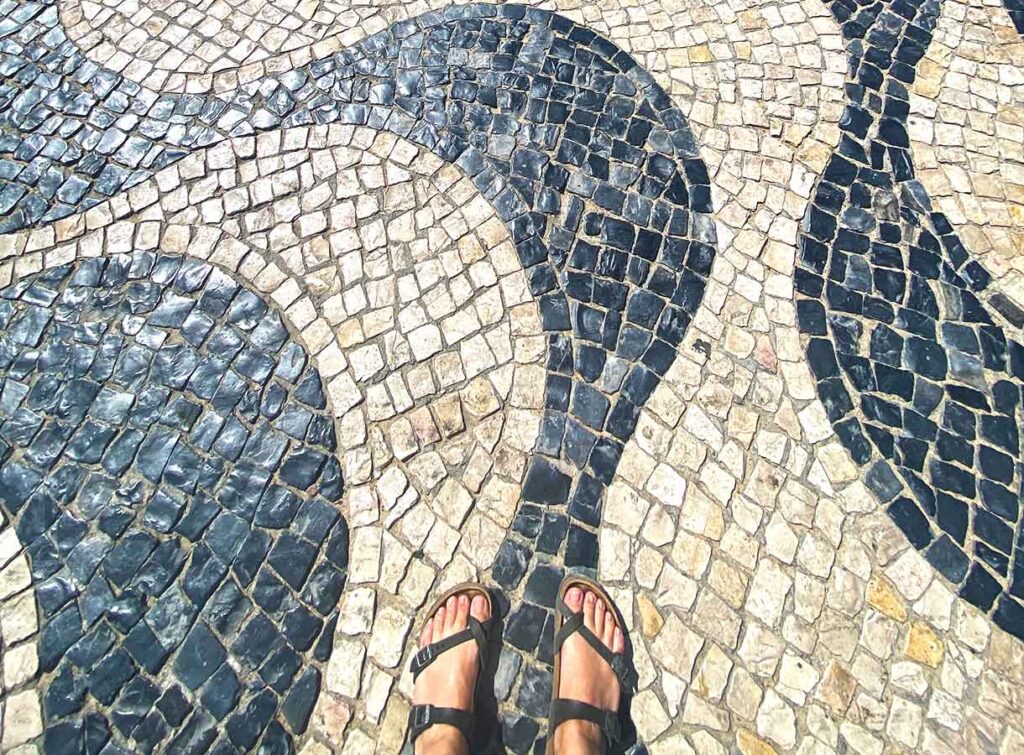
The sidewalks of Lisbon are famous for their calcada portuguesa, intricate designs made from small black and white stones. While they look beautiful, these sidewalks can be quite treacherous. Over time, the stones become smooth and slippery, especially when wet, which raises the risk of falls. It’s important to wear shoes with good grip and consider walking on the edges of streets when possible.
Moreover, there’s minimal relief from the sun or rain on these paths. During my summer visit, I found that walking in the shade was nearly impossible, leaving me exposed to the elements.
Hills and Stairs in Lisbon
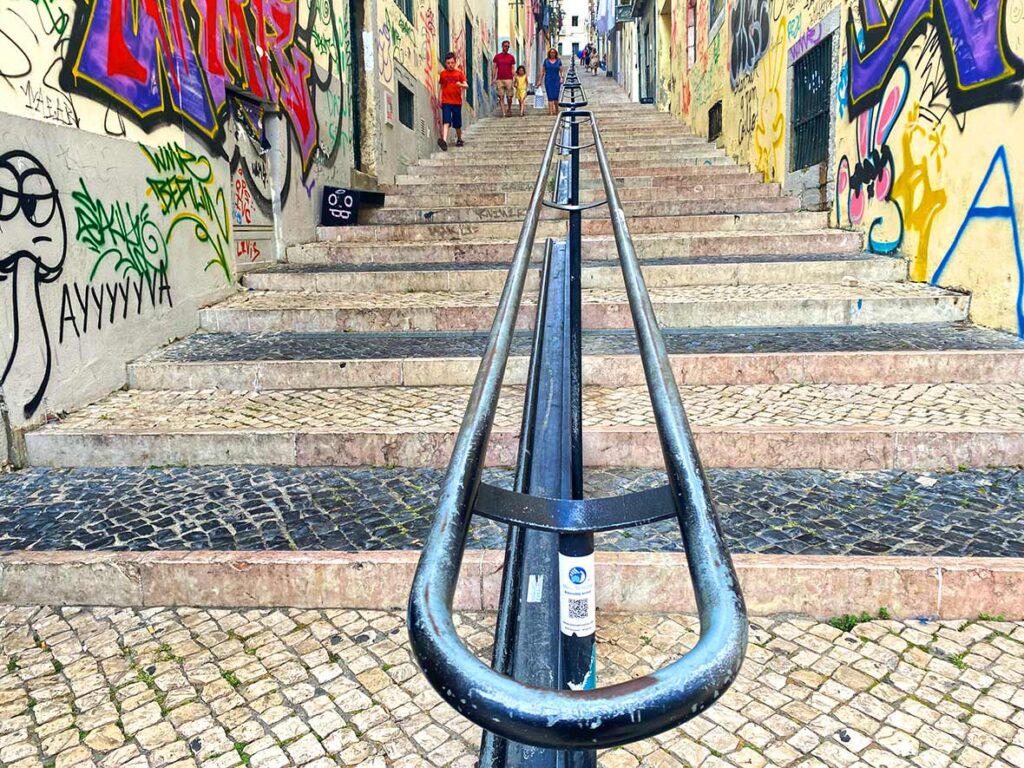
Lisbon is notorious for its steep inclines, making it a bit of a workout for those exploring its hills. The city’s unique geography means you’ll face uphill climbs whether you’re heading inland from the waterfront or moving parallel to it. Here are a few notable uphill walks to consider:
- Cais do Sodre Station to the Barrio Alto – 950 meters with a 123-meter elevation gain (13% incline)
- Fado Museum to Porta do Sol Viewpoint – 400 meters with a 50-meter elevation gain (12.5% incline)
- Marim Moniz Square to Restauradores Square – 600 meters with a 40-meter elevation gain (7% incline)
Distances in Lisbon
If you can manage the hills, you’ll discover that Lisbon’s historic center is compact, making many attractions easily accessible. Generally, most of the top sights are within a one-kilometer radius from the central Arco da Rua Augusta. Even the furthest attractions, like the Time Out Market and the Fado Museum, are only two kilometers apart.
While many visitors tend to stay within this semi-circle, it’s well worth venturing out to places like Cascais, Belem, and the LX Factory which can be reached via a short train or tram ride.
The Best Shoes for Walking in Lisbon
Considering the unique challenges presented by Lisbon’s sidewalks, it’s essential to choose your footwear wisely. Here’s what I suggest packing:
- A comfortable pair of running shoes
- A pair of non-slip boots (for cooler weather) or sandals (for warmer months)
- A basic pair of waterproof sandals for the hotel pool or beach
With these three options, you’ll be well-prepared for every type of terrain in Lisbon.
Overall Walkability in Lisbon
In conclusion, while Lisbon does feature many picturesque neighborhoods that can be explored on foot, the city overall might not be the most walkable due to its steep hills and slippery sidewalks. It’s advisable to utilize a mix of transportation options to enhance your experience. Once you find yourself in a neighborhood, enjoy wandering its streets at your leisure before taking a break with public transport to your next destination.
Of course, if you’re in excellent shape and love a challenge, navigating the hills can be rewarding! Just be prepared—it’s not for everyone.
Alternatives to Walking Around Lisbon

For those who prefer not to walk, Lisbon offers a robust public transportation system, including metro, buses, trams, and funiculars. For travelers looking to discover nearby towns like Belem and Cascais, the train network provides an easy and quick commute.
While the metro is the quickest option, finding that all escalators and elevators are out of service can be frustrating. If you have mobility challenges, the bus system tends to be more reliable, providing full accessibility for the majority of its routes.
While trams and funiculars are picturesque, they can also attract long lines, so considering the bus alternatives might be a more efficient way to navigate the city.
FAQs about Walking in Lisbon
Is Lisbon safe for walking at night?
Lisbon is generally safe for walking at night, but it’s wise to stick to well-lit areas and remain vigilant, especially in quieter neighborhoods.
What’s the best time of year to walk in Lisbon?
The best time for walking in Lisbon is during spring (April to June) or fall (September to October) when the weather is typically mild and pleasant.
Are there bike rentals available in Lisbon?
Yes, Lisbon has several bike rental shops and bike-sharing programs. Cycling can be a great way to explore the flatter areas of the city!
Can I use public transport if I get tired from walking?
Absolutely! Lisbon’s public transport, including trams, buses, and metro, is efficient and can help you cover longer distances comfortably.