
10 Activities to Enjoy in Chemnitz, Germany
10 Things to Do in Chemnitz, Saxony, Germany Although Chemnitz…
10 Things to Do in Chemnitz, Saxony, Germany
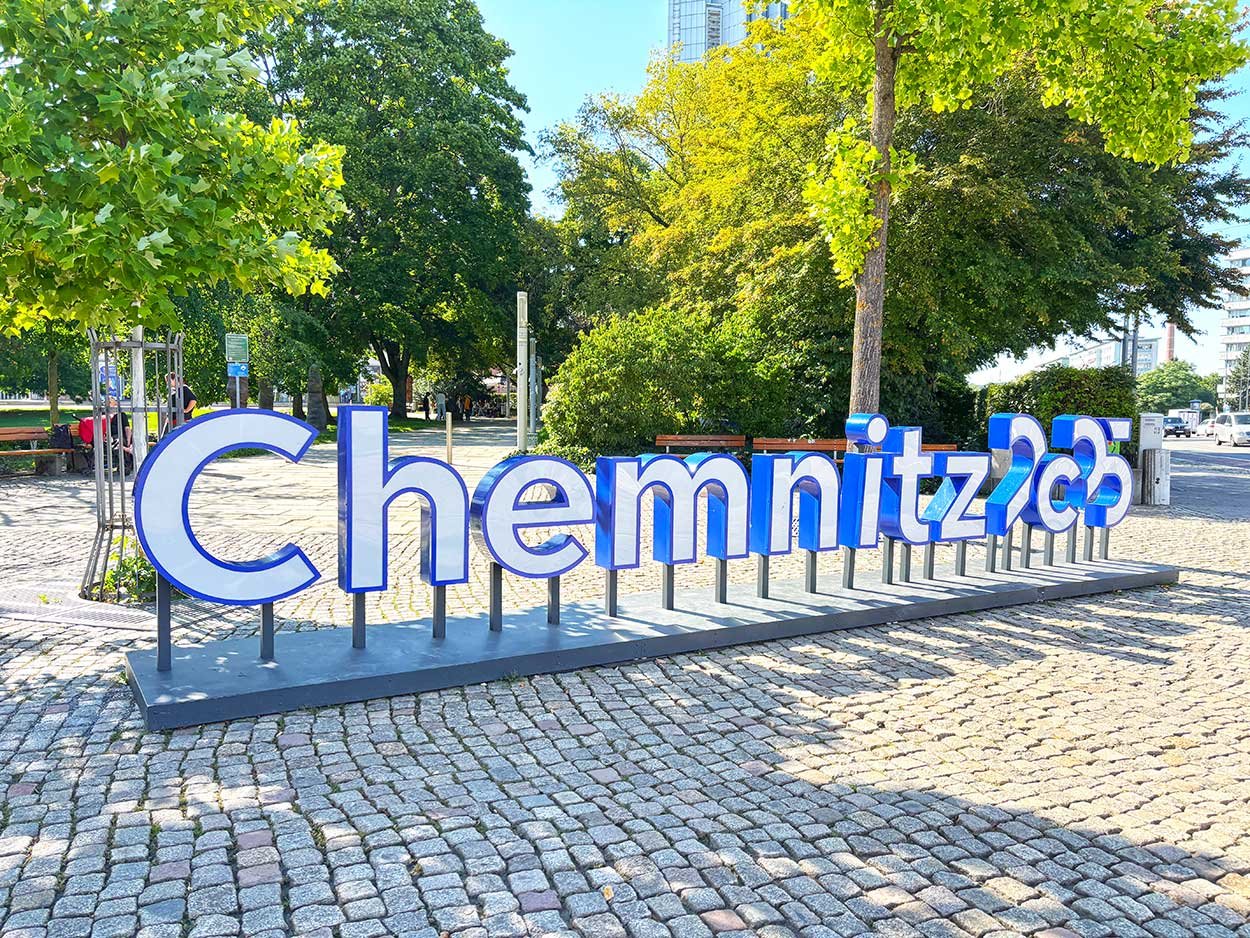
Although Chemnitz was the European Capital of Culture in 2025, few people outside of Germany have heard of this city in Saxony. I, too, was unaware of its charms until I purchased tickets to a concert there and began researching my journey. Would I find enough activities to fill my time? The answer is yes! Chemnitz offers plenty to explore in a short visit, and if you’re staying longer, consider day trips to nearby towns and villages.
1 – The Karl Marx Monument

If you’re in search of a truly impressive Karl Marx statue, this one is hard to beat. Standing over seven meters tall and made from bronze, it features an inscription that reads “Workers of the World Unite” in multiple languages.
The city briefly changed its name to Karl-Marx-Stadt from 1953 until German reunification in 1990, and this monument was constructed in 1971 along what was then called Karl-Marx-Allee. Despite being Chemnitz’s most famous landmark, it tends to be surprisingly quiet, with few tourists around.
2 – Markt Square Chemnitz

A marketplace has existed at the center of Chemnitz since the 1100s, flourishing particularly in the 1400s with the rise of trading houses.
The most notable building in the square is the Siegert House, a baroque residence with a striking pink facade. This was the home of a local businessman who played a crucial role in developing the local textile industry.
In addition to the Siegert House, other significant buildings include the Old City Hall, the New Town Hall (which features a mural by Max Klinger), and the iconic “Manifold” water fountain. There’s a modern shopping center and the primary tourist information office nearby.
3 – Jakobkirche

Jakobkirche, or the Church of Saint Jacob, was reconstructed after being damaged during World War II. This stunning building exhibits a blend of Gothic and Art Nouveau styles, adorned with colorful buttresses and warm terracotta tiles.
When I visited, entry was free, and parts of the interior were used for an art exhibition.
4 – The Museum of Natural History

The Museum of Natural History’s highlight is its display of logs from a 300-million-year-old petrified forest. This exhibit is well-known for being one of the finest examples of siliceous wood in the world, where silica replaces organic materials while preserving their original structure.
The museum also features many other fossils from a prehistoric volcanic eruption and numerous interactive exhibits for younger visitors.
* Free public toilets are available inside the museum building.
5 – Schlossteich Park

During my visit, I stumbled upon Schlossteich Park while waiting for my dinner reservation at a nearby restaurant. This lovely park features a one-kilometer loop around a tranquil pond, surrounded by shady trees.
You can rent paddle boats from the “Gondelstation am Schlossteich” or grab a snack or drink at the picturesque Café Milchhäuschen nearby.
6 – The Red Tower

While much of Chemnitz’s city center has a modern feel, the historic Red Tower stands out. This ancient landmark is the oldest in the city, reaching a height of 35 meters, first built for defense and later used as a prison.
It’s worth asking at the Tourist Information office whether the Red Tower is open for visits during your stay to check for any local markets or activities taking place nearby.
7 – The Chemnitz Art Collections Museum

Chemnitz boasts one of Germany’s largest public art collections, housed in this museum on Theaterplatz, showcasing a rotating selection of works—many created by German artists from the Chemnitz area.
Admission is €10 for adults and free for children under 18. It’s usually open from Tuesday to Sunday, though closed on Mondays.
8 – Petrikirche (Church of Saint Peter)

The Petrikirche, or Church of Saint Peter, is located on Theaterplatz, featuring a Neo-Gothic design crafted from sandstone and brick, noted for its intricate entrance (which was locked during my visit). The church houses a significant organ and historical bells.
Your best chance to explore the interior is during the afternoon from Wednesday to Sunday, but do check ahead as opening times may vary.
9 – Stadtbad Swimming Pools

Chemnitz boasts one of Germany’s finest public baths, showcasing stunning Bauhaus architecture. Inside, you’ll find a 50-meter swimming pool, alongside a sauna area complete with various dry saunas and steam rooms.
It’s wise to check whether you’re visiting on a day designated for swimming suits or if it’s a textile-free day, as this has stirred local debate.
10 – State Museum of Archaeology

From the outside, the State Museum of Archaeology resembles a department store, but inside, it covers 300,000 years of Saxony’s human history, from prehistory to the early industrial era. The exhibits span three levels, with a fourth dedicated to rotating exhibits.
Highlights include a life-sized “Glass Neanderthal” model, the oldest clay figurine in Central Europe, and a mesmerizing floating map of Saxony. The museum is open from Tuesday to Sunday, with a standard admission fee of €8, including an audioguide in several languages.
Bonus! Festivals in Chemnitz

Chemnitz hosts several annual festivals you might want to plan your visit around:
- Weinfest Chemnitz – This summer wine festival lasts nearly a full month, featuring over 50 vendors offering wine tastings, festival foods, and nightly entertainment. I indulged in this festival nearly every day of my stay and even brought home a Karl Marx wine glass as a keepsake!
- Chemnitz Christmas Market – Usually running from late November to a day or two before Christmas, this market features around 150 vendors and becomes a festive highlight for locals and visitors alike.
- KOSMOS – Each summer, more than 100,000 attendees come to celebrate democracy and social justice through arts, culture, business, and academia.
Bonus! Day Trips from Chemnitz
Chemnitz is conveniently located about an hour away from both Leipzig and Dresden by fast train, making them ideal day trip destinations. Personally, I recommend staying in either of these cities and making a day trip to Chemnitz.
The charming town of Freiberg is also worth the journey, home to one of the world’s best mineralogical museums. Additionally, I took a short trip to Glauchau, known for its picturesque castle museum. If possible, I suggest visiting by car to make the most of your journey.
I had my eyes set on Zwönitz, but I believe it’s best explored by car as well.
Frequently Asked Questions
What is the best time to visit Chemnitz?
The best times to visit Chemnitz are during the spring and early fall when the weather is generally mild, and various events and festivals take place.
How can I get to Chemnitz from other German cities?
Chemnitz is accessible by fast train from major cities like Leipzig and Dresden, making it a convenient destination for day trips or short stays.
Are there any good local restaurants?
Yes, Chemnitz has some great spots including Janssen for a riverside dining experience, and Wenzel for Czech cuisine.
What are some must-see attractions in Chemnitz?
Don’t miss the Karl Marx Monument, the Museum of Natural History, and the Chemnitz Art Collections Museum for a true taste of the city’s culture.